Posts

Showing posts with the label wma

House E-1027, (Roquebrune-Cap-Martin); 1926-29; International Style

Image
House E-1027 is a villa that was designed by architect Eileen Gray. This house was considered one of Gray’s most significant works because the design of the house was able to show the difference between decoration and architecture. The name E-1027 was actually a code for Eileen Gray and her lover, Jean Badovici. The E stood for Eileen, 10 stood for Jean, 2 stood for Badovici, and 7 stood for Gray. The numbers stood for the numeric placement of the letters in the alphabet (i.e. J is the 10th letter in the alphabet). The construction of the house completed in 1929, which means Gray was 51 years old at the time. Gray wanted this house to be a sort of place for romantic getaway, but Gray and Badovici were never able to agree on what to do. The space was designed in a way that would resemble how people living inside would move in the space. Inside the house, Gray put built-in cabinets, drawers, guest rooms, and other spaces that allowed privacy. In addition, there were little windows th...

Wainwright Building, (St Louis, Missouri); 1891; Classical School

Image
The Wainwright Building (also known as the Wainwright State Office Building) is a building that was designed by architectural firm Adler and Sullivan. It is a ten story office building, made of red bricks and is located in downtown St. Louis, Missouri. The name of the building was named after Ellis Wainwright, who was a local brewer, building contractor, and financier. Wainwright needed an office space for his brewer company called St. Louis Brewers Association. The Wainwright Building is currently owned by the state of Missouri. It is also considered to be one of the first early skyscrapers in the world. The style of architecture of the Wainwright Building is Classical School. In 2013, it was named as one of the ten buildings that changed the worlds because it was “the first skyscraper that truly looked the part” and Louis Sullivan was named the “father of skyscrapers”. (“Mapping PBS’s 10 Buildings That Changed America”) Although skyscrapers had already been built in New York an...

Villa Cook, (Boulogne-sur-Seine, Paris, France); 1924; Modernist

Image
The Villa Cook (also known as Maison Cook) was a house that was built by architect, Le Corbusier. The house is located in Boulogne-sur-Seine, in France. Le Corbusier, who was then not very well-known, was introduced to the Cook family. At the time, Le Corbusier was designing a series of villas. Later, the Cooks commissioned Le Corbusier to design the Villa Cook on the outskirts of Paris. Le Corbusier labeled it as “the first cubic house.” Villa Cook was one of the first works of Le Corbusier that was built according to his Five Points of Architecture: piloti, open plan, free facade, horizontal sliding windows, and roof garden. The spaces in the room are ground floor, first floor, second, floor, and roof floor. On the ground floor, there is a large entrance hall and stairs. There is also access in the back to the garden and to the utility room. The first floor has the main staircase that connects the ground floor and a plant that seems to wrap around the stairs. On the second floo...

Farnsworth House, (Plano, IL); 1951; Modernist

Image
The Farnsworth House is a steel and glass house that was designed by architect Ludwig Mies van der Rohe. It was built in 1951 and it was commissioned by Dr. Edith Farnsworth, a nephrologist, because she decided that it would be a good place for her to fulfill her hobbies, which were playing the violin, enjoying nature, and translating poetry. The Farnsworth House is considered one of most iconic masterpieces of the International Style of architecture. It became a part of the National Register of Historic Places in 2014 and was designated a National Historic Landmark in 2016. The house is currently being owned by a historic preservation group called National Trust for Historic Preservation, and is being operated as a historic house museum. It was used as a private house for Dr. Edith Farnsworth until 2003 when it became a public museum. The Farnsworth House is located in a once rural setting on the edge of the Fox River, just south of Plano, Illinois. Plano is a small city that is l...

Darwin D. Martin House Complex, (Buffalo, NY); 1903 - 05; Prairie House

Image
The Darwin D. Martin House Complex is a residence located in Buffalo, NY. It was designed by architect Frank Lloyd Wright and it was built between 1903 and 1905. It is one of Wright’s greatest works, among the Guggenheim Museum in New York City, NY and Fallingwater in Pennsylvania. The Martin House Complex was designed during Wright’s Prairie House period. The Prairie House period was a new approach to domestic architecture that Wright decided to take. It was inspired by the flat landscape in the Midwest and it is a unique style of architecture. (“The Prairie Style | Frank Lloyd Wright Trust”) Prairie houses have low, horizontal lines that were designed to resemble how prairies are flat and they are built around a central point which is the chimney. Prairie houses contain mainly open spaces rather than confined rooms. The purpose of this was to show the contrast between the interior spaces and the surrounding terrain. (“Prairie Style”) In the Martin House Complex lived Dar...

Maison Carrée, (Nimes, Southern France); 2 AD; Roman

Image
Maison Carrée is a building in Nimes, France. Its name is French for “square house”. The construction of Maison Carrée was completed in 2 AD and it is one of the best preserved Roman temples. Originally, the Maison Carrée was dedicated to the grandsons of Augustus, a Roman statesman and military leader. The Maison Carrée is raised on a 2.85 m high podium and the temple itself forms a rectangle that is 26.42 m by 13.54 m. On the front of the temple, there are six Corinthian temples holding up the building. Along the sides, there are twenty columns that hold it up. The door is very large and measures 6.87 m high by 3.27 m wide but it leads to a small interior space with no windows. Over the years, the Maison Carrée went through many restorations. It used to be part of a large complex that joined with other buildings. They ended up being demolished because the Romans would have enjoyed the isolation that this temple ended up being in. The Maison Carrée ended up being inspiration for ...

Birkenhead Park, (Birkenhead, Merseyside, England); 1847; Greek Revival

Image
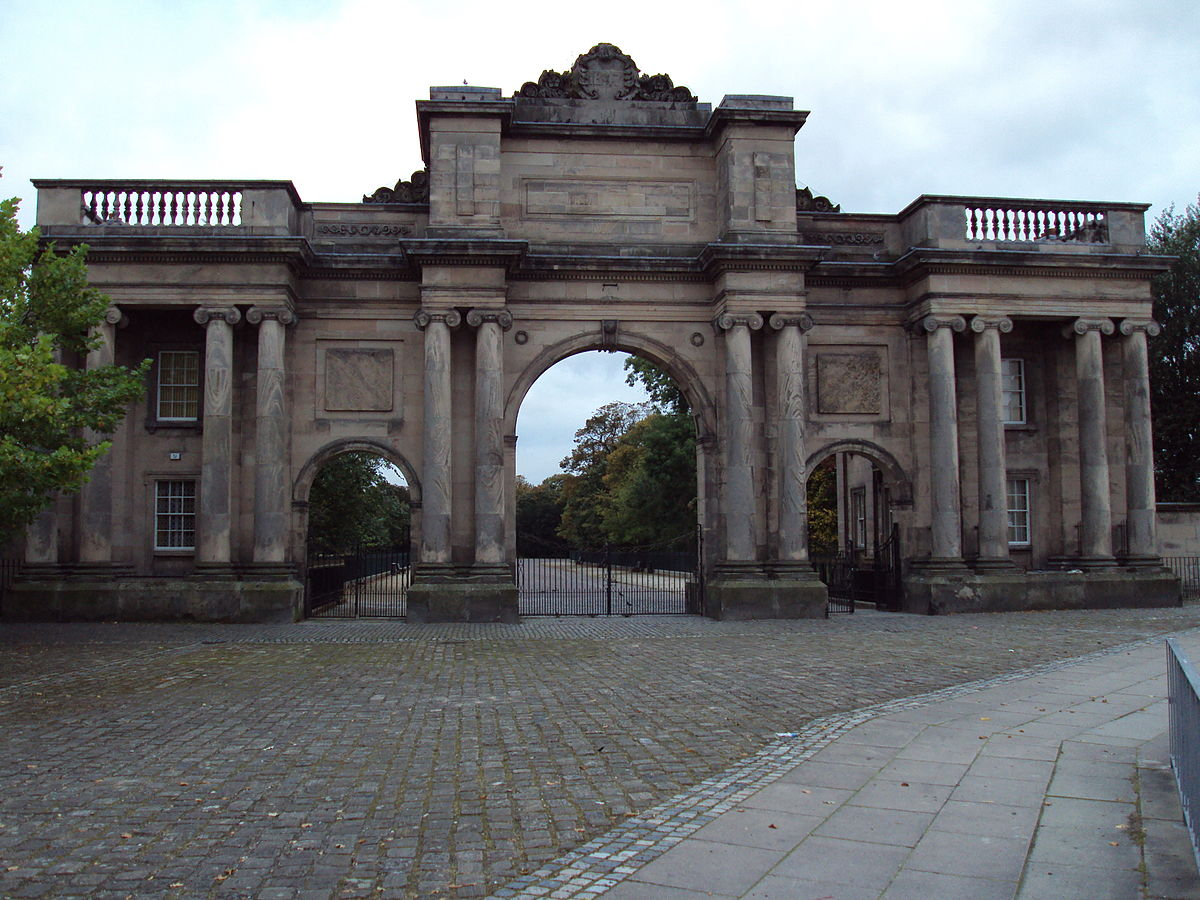
Birkenhead Park is a public park located in Merseyside, England and opened on April 5, 1847. The Birkenhead Park is known as one of the first publicly funded parks in the world. The park came to be when the idea of a municipal park was proposed by the Improvement Commission in 1841. The Improvement Commission is part of Birkenhead’s local government. 226 acres of land from the western edge of Birkenhead was used to create this park. There were certain parts of the land that were proposed to be part of the park but it was later sold so that construction of the park could be afforded. In order to enter the park, there are five different entrances with lodges. The largest entrance is called the Grand Entrance Gateway, which is shown in the picture above. There are three archways, two small and one big. The entrance is also supported by columns which are in groups of two. There are six groups of two columns on the Grand Entrance Gateway. It was designed by Louis Hornblower. The other e...

Palace of Westminster, (London, England); 1016; Gothic Revival

Image
The Palace of Westminster is where the two houses of the Parliament of the United  Kingdom, House of Commons and the House of Lords meet. It is located in the city of Westminster in London, England. More specifically, it is located on the right bank of the River Thames. The palace was built in 1016 but had to be demolished in 1834 because of a fire. It was then rebuilt from 1840 to 1876. The architectural style of the Palace of Westminster is gothic revival. The architect of the palace is named Sir Charles Barry. Barry uses a style of architecture called the Perpendicular Gothic style. It was popular during the 15th century and then it came back in the 19th century during the gothic revival period. Although Barry was not a gothic architect, he had the help from Augustus Pugin. In the 11th century, Barry designed the Westminster Hall and managed to survive the fire in 1834. However, Pugin did not like the symmetrical aspects of the building. The Palace of Westminster has three...

Bank of England, (England, United Kingdom); 1694; Neo-Classical

Image
The Bank of England (formerly named “The Governor and Company of the Bank of England) is the central bank for the United Kingdom. It was established on July 27, 1694 and was nationalized in 1946. The Bank of England is the second oldest central bank still in operation and the 8th oldest bank in the world. Currently, it is still one of the bankers for the Government of the United Kingdom. The headquarters for the Bank of England is located Threadneedle St which is in London’s main financial district and it has been there since 1734. The street is often referred to The Old Lady of Threadneedle Street or The Old Lady which was a name from a satirical cartoon from 1797. The Bank of England entrance has an arch and its exterior is supported by six groups of two columns. This building is honored by architects all over because the architect, Sir John Soane, used took natural light and scale into account when it was being designed. The spaces have very simple ornamental designs and ...

Brandenburg Gate, (Berlin, Germany); 1788 - 91; NeoClassicism

Image
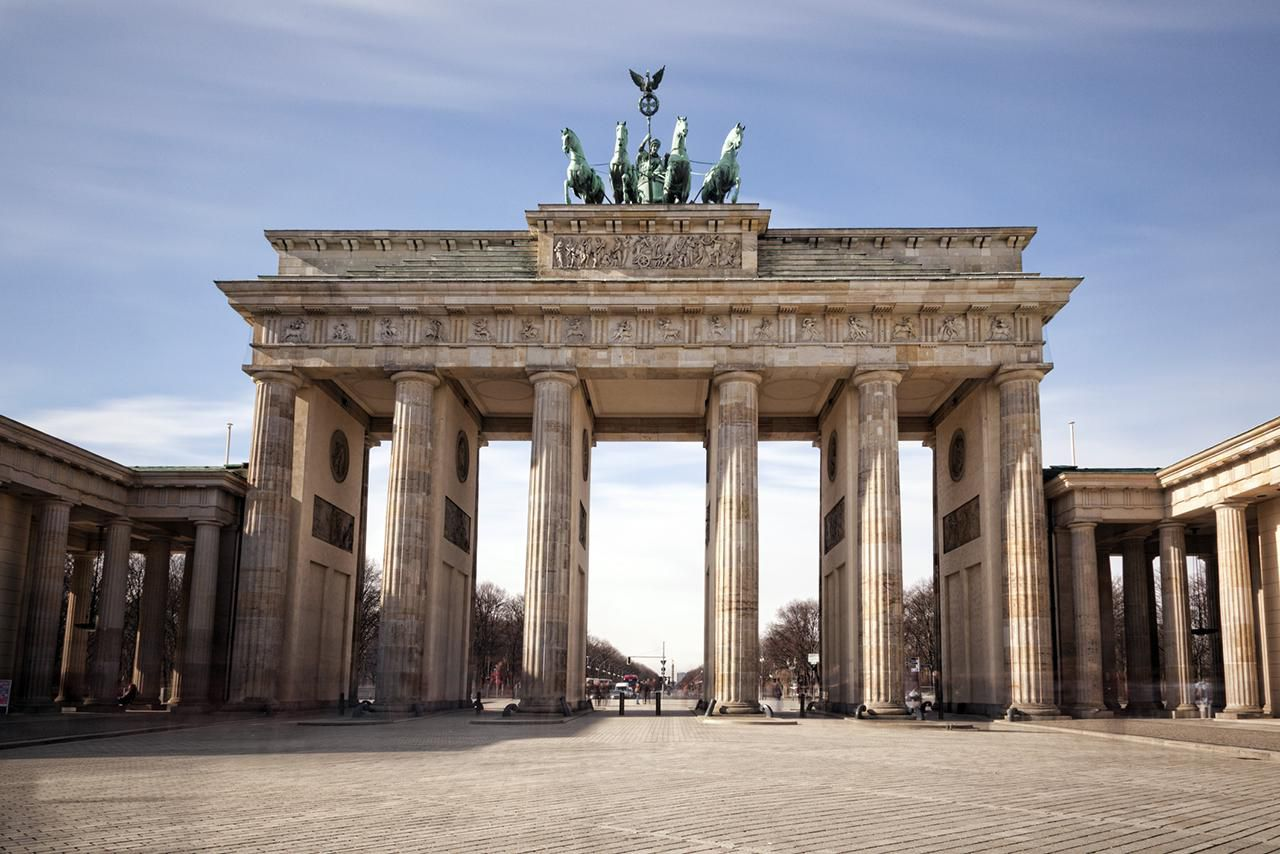
Brandenburg Gate Front View of Brandenburg Gate The Brandenburg Gate is a neoclassical monument located in Berlin, Germany from the 18th century. It was designed by architect, Carl Gotthard Langhans and is one of the best known landmarks in Germany. The Brandenburg Gate is considered a symbol of European unity and peace and symbolizes over 200 years of history. This structure was built after order was temporarily restored during the early Batavian Revolution and was ordered by Prussian king Frederick William II. The site of the monument used to be a city gate that led to the start of the road from Berlin to the town that used to be the capital of Margraviate of Brandenburg . The gate represented German unity and freedom after the end of the Cold War. On November 9th, 1989, the Berlin Wall fell and hundreds of people were celebrating this in front of the Brandenburg Gate. The Brandenburg Gate was originally built to show the end of a boulevard, rather than t...